Custom embroidery patches come from six very different production paths in 2026, and the right one depends on order size, turnaround, and how much detail your logo needs — not which company has the flashiest website. Best overall for digitizing-to-production: DigitEMB. Best for rush small-batch orders: a local embroidery shop. Best for bulk volume at scale: an overseas patch manufacturer.
- DigitEMB wins for custom embroidery digitizing paired with patch production — best for brands that need a clean stitch file before anything gets sewn.
- Local embroidery shops win for rush orders under 50 pieces where in-person color matching matters.
- Overseas bulk manufacturers win on large-volume orders (500+) but add weeks of shipping time.
- DIY home embroidery machines only make sense for one-off or hobbyist patches, not team or brand runs.
- Printed and woven patch makers solve specific detail problems embroidery cannot — photorealistic art and tiny text.
Why this matters
Most people searching for the best custom embroidery patch makers in 2026 are trying to solve one of two problems: their logo has fine detail that will not survive a low stitch count, or they need patches fast and do not know which production route gets there. Picking the wrong maker means paying for a redo — a common outcome when artwork goes straight to a machine without proper digitizing first, since raster logos and thin gradients do not translate into stitch paths on their own.
The category is not one list of vendors — it is a set of production methods, each suited to a different order size, timeline, and design complexity. This guide ranks those methods the way a buyer actually chooses between them.
What makes the best custom patch maker
- Digitizing accuracy — a stitch file with correct stitch types (satin, fill, running) and proper underlay holds detail and does not pucker fabric
- Border and backing options — merrowed, hot-cut, PVC, woven, and chenille all read differently on a jacket versus a hat
- Turnaround and minimum order quantity — rush jobs and 12-piece team orders need a different maker than a 2,000-unit run
- Color matching — thread systems and Pantone-to-thread conversion determine how close the patch lands to your brand colors
- Proof and revision process — a digital or physical proof before production catches errors before they are stitched into 500 patches
- Application method — iron-on, sew-on, or hook-and-loop backing changes how the patch gets used once it arrives
Custom embroidery patch makers at a glance
| Maker type | Best for | Standout feature | Key limitation |
|---|---|---|---|
| DigitEMB | Custom digitizing + patch production | Clean stitch files before production starts | Not a same-day walk-in service |
| Local embroidery shop | Rush, small-batch orders | In-person color and proof review | Higher per-unit cost on volume |
| Overseas bulk manufacturer | Large-volume runs (500+) | Lowest per-unit cost at scale | Long shipping and revision lead times |
| DIY home embroidery machine | One-off, hobbyist patches | Full control, no vendor wait | Limited hoop size and speed |
| Printed/PVC patch maker | Photorealistic or gradient logos | No embroidery texture limits | Different look and feel than stitched patches |
| Woven patch maker | Fine detail, small text | Higher thread density than embroidery | Fewer border style options |
1. DigitEMB: best custom embroidery patch maker for digitizing-to-production
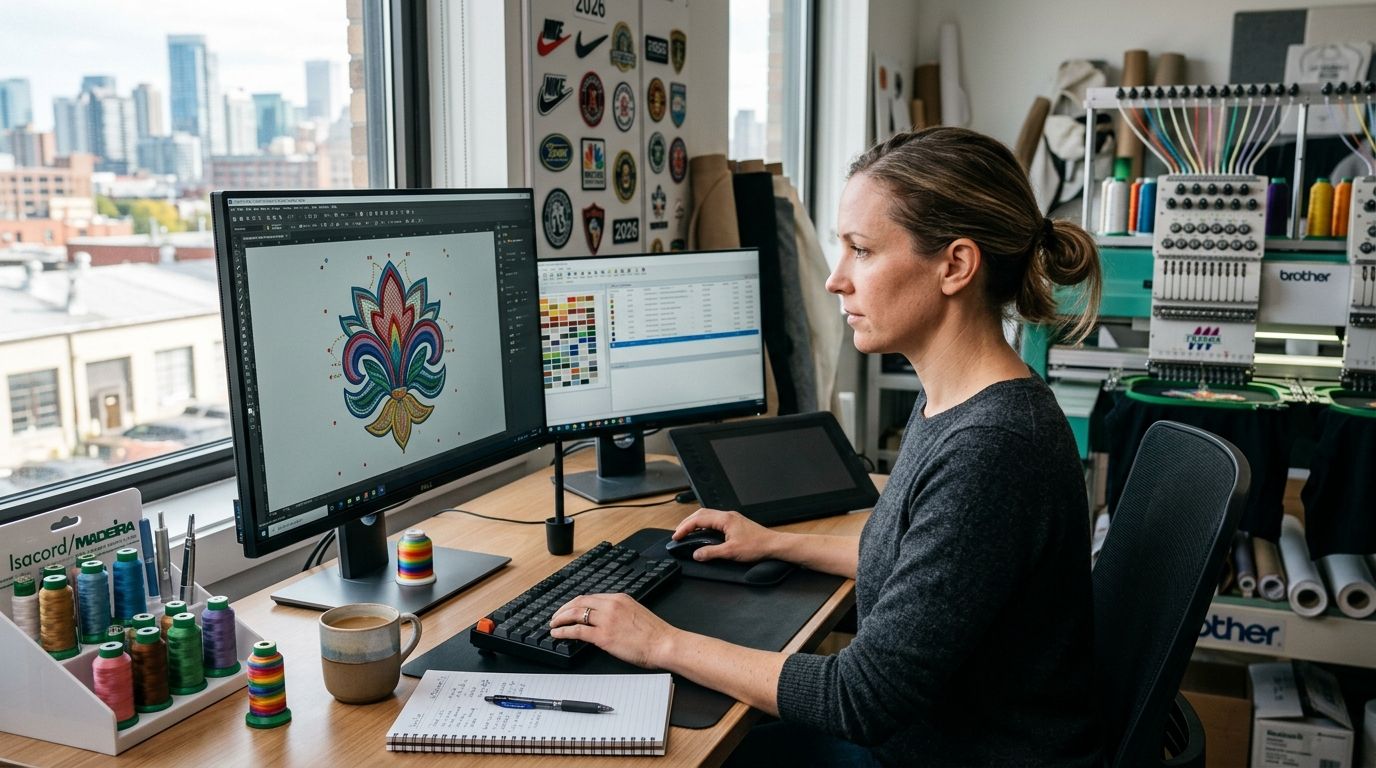
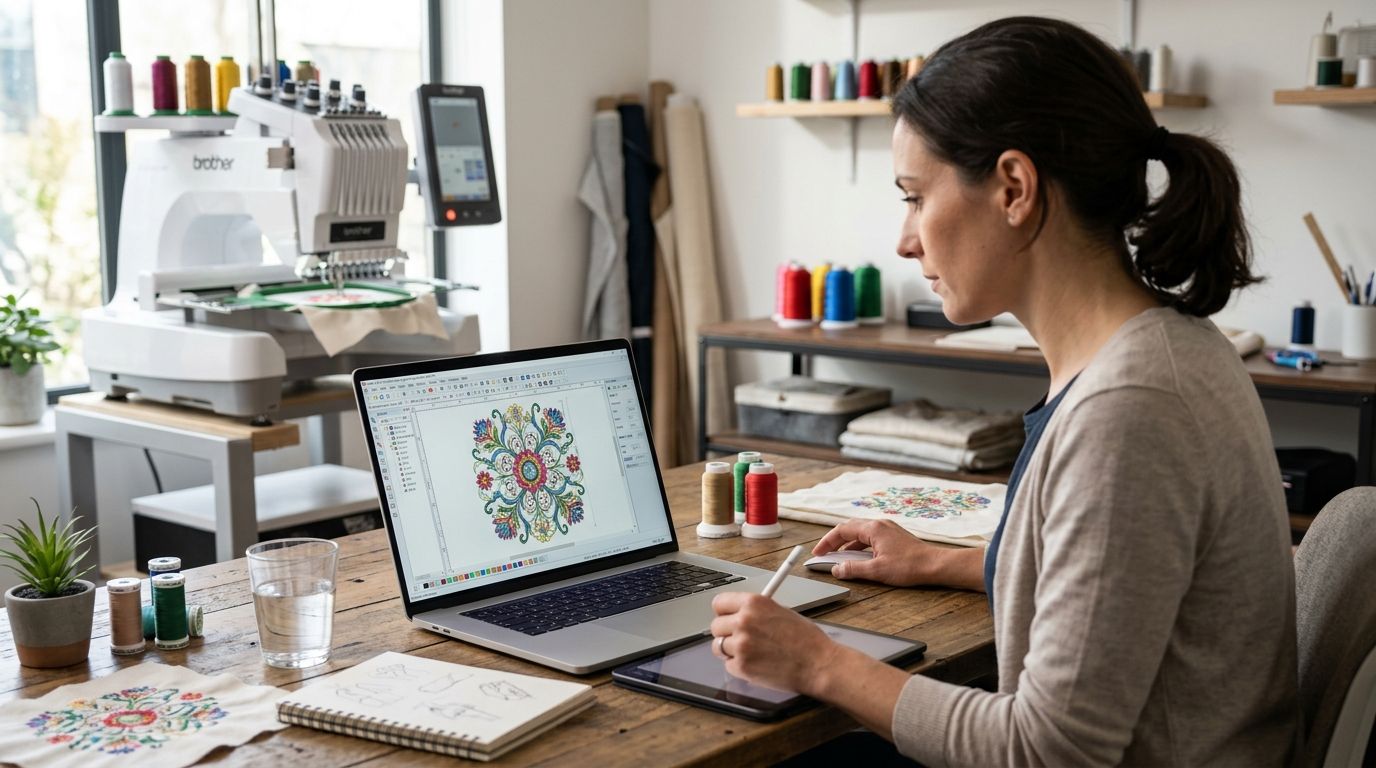
DigitEMB takes source artwork through digitizing — converting the logo into a stitch file with defined stitch types and underlay — before producing the patch itself. That order matters: a design digitized correctly the first time avoids the puckering, gaps, and color drift that come from rushing straight to a machine.
DigitEMB pros:
- Digitizing and patch production handled as one workflow, not two vendors
- Stitch files built with correct underlay and stitch direction for the material
- Works from raster or vague source art, not just pre-vectorized files
DigitEMB cons:
- Not built for walk-in, same-day pickup
- Best suited to brand and team orders rather than single novelty patches
Before any patch goes into production, check embroidery digitizing costs so the stitch count and complexity match the budget for the run. Verdict: Buy — the clear pick when the artwork needs a real digitizing pass before it becomes a patch.
2. Local embroidery shops: best for rush, small-batch orders
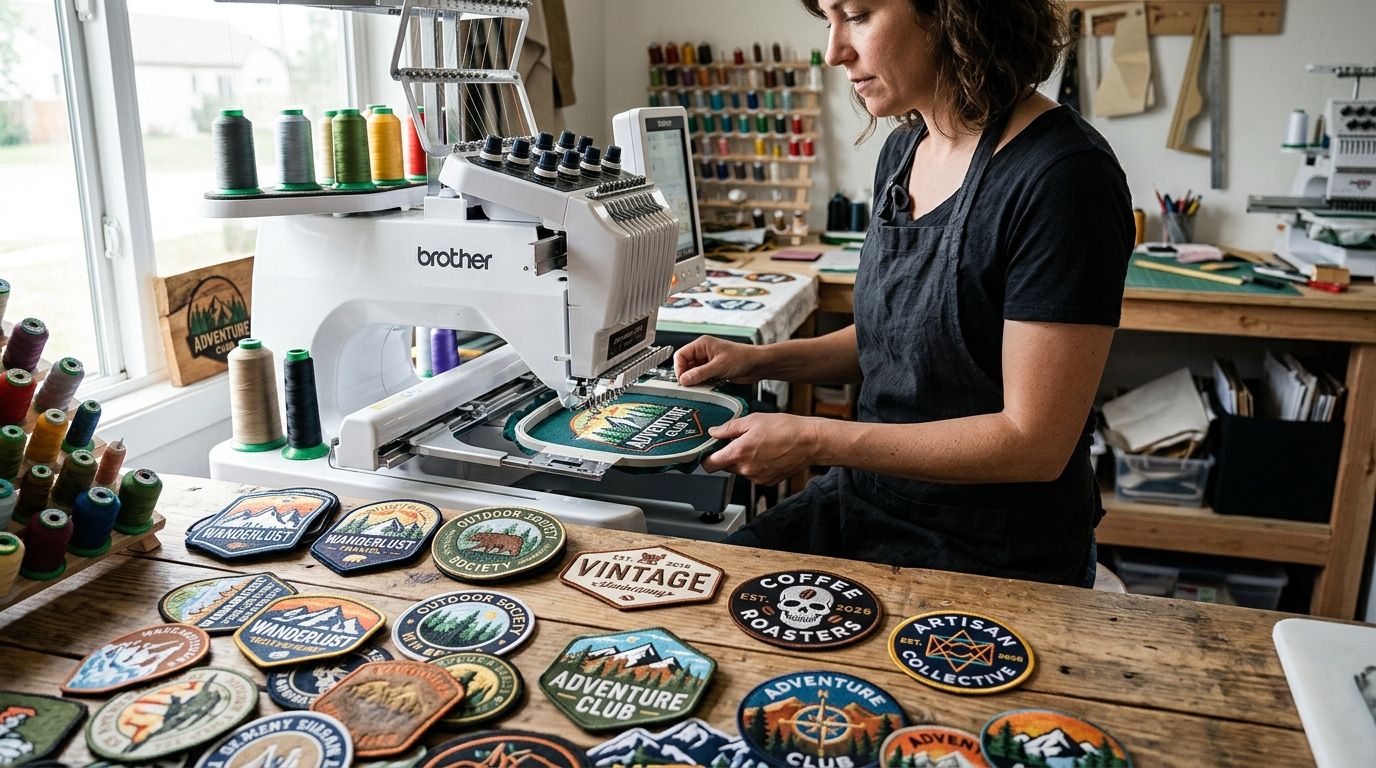
A local shop earns its place when a team needs 12 to 50 patches in a week and wants to see a physical proof before the full run gets sewn. Turnaround beats every other option on this list for small quantities.
Local embroidery shop pros:
- Fastest turnaround for small quantities
- In-person thread color matching
- Easy to request a same-week revision
Local embroidery shop cons:
- Per-unit cost climbs fast past 100 pieces
- Digitizing quality varies shop to shop
Verdict: Buy for rush jobs, Skip for volume.
3. Overseas bulk patch manufacturers: best for large-volume orders
Once an order crosses into the hundreds or thousands of units, overseas manufacturers bring the per-unit cost down in a way domestic shops usually cannot match. The tradeoff is time — shipping and revision cycles run in weeks, not days.
Overseas bulk manufacturer pros:
- Lowest per-unit cost at scale
- Wide range of backing and border finishes available in bulk
- Suited to retail, uniform, and franchise-scale orders
Overseas bulk manufacturer cons:
- Shipping and customs add weeks to the timeline
- A digitizing error discovered late means a slow, expensive reprint
Verdict: Buy for 500+ unit orders planned months in advance; Wait if the timeline is under a month.
4. DIY home embroidery machine owners: best for one-off or hobbyist patches
Someone with a home embroidery machine and a stitch file can make a single patch or a handful for a hobby project without waiting on a vendor at all. It is the only option on this list with zero outside turnaround.
DIY home embroidery machine pros:
- No vendor lead time
- Full control over placement and thread color per unit
- Fine for testing a design before a bigger order
DIY home embroidery machine cons:
- Hoop size limits patch dimensions
- Consistency across a large batch is hard to maintain by hand
Anyone weighing this route in 2026 should look at what embroidery machines built for custom patches can actually handle in terms of hoop size and stitch speed before committing. Verdict: Buy for one-off pieces, Skip for team or brand runs.
5. Printed and PVC patch makers: best for photorealistic or gradient logos
Some logos have gradients, photo elements, or fine color blends that embroidery thread simply cannot reproduce. Printed and PVC patches sidestep that limitation entirely by using ink or molded rubber instead of thread.
Printed/PVC patch maker pros:
- Handles gradients and photorealistic detail embroidery cannot
- PVC options are waterproof and hold up outdoors
- No stitch-count limits on complexity
Printed/PVC patch maker cons:
- Different texture and feel than a stitched patch
- Does not read as embroidered on apparel where that texture is expected
Verdict: Buy when the design has photo-level detail; Skip if the brand wants a classic embroidered look.
6. Woven patch makers: best for fine detail and small text
Woven patches use a tighter thread weave than standard embroidery, which is why they show up on small labels and patches with text only a few millimeters tall. Standard embroidery stitches cannot hold that resolution without the letters filling in.
Woven patch maker pros:
- Higher thread density than embroidery for crisp small text
- Flatter profile than a thick embroidered patch
- Good fit for care labels and small brand tags
Woven patch maker cons:
- Fewer border and backing styles than embroidered patches
- Less texture and dimension than a traditional patch
Verdict: Buy for small text and fine detail, Hold for standard logo patches.
How we ranked these
Each maker type was measured against the six criteria above: digitizing accuracy, border and backing range, turnaround against minimum order size, color matching, proof process, and application method. No single option wins every category — that is why the list reads as a decision tree by use case, not a single leaderboard.
Which custom embroidery patch maker should you choose?
If the artwork needs a real digitizing pass and the order is for a brand or team, DigitEMB is the default pick for 2026. If the order is small and the deadline is this week, a local shop wins on speed. If the order is measured in hundreds of units and there is a month or more of lead time, an overseas manufacturer brings the cost down. Everything else on this list — DIY machines, printed patches, woven patches — solves a specific edge case rather than replacing the first three.
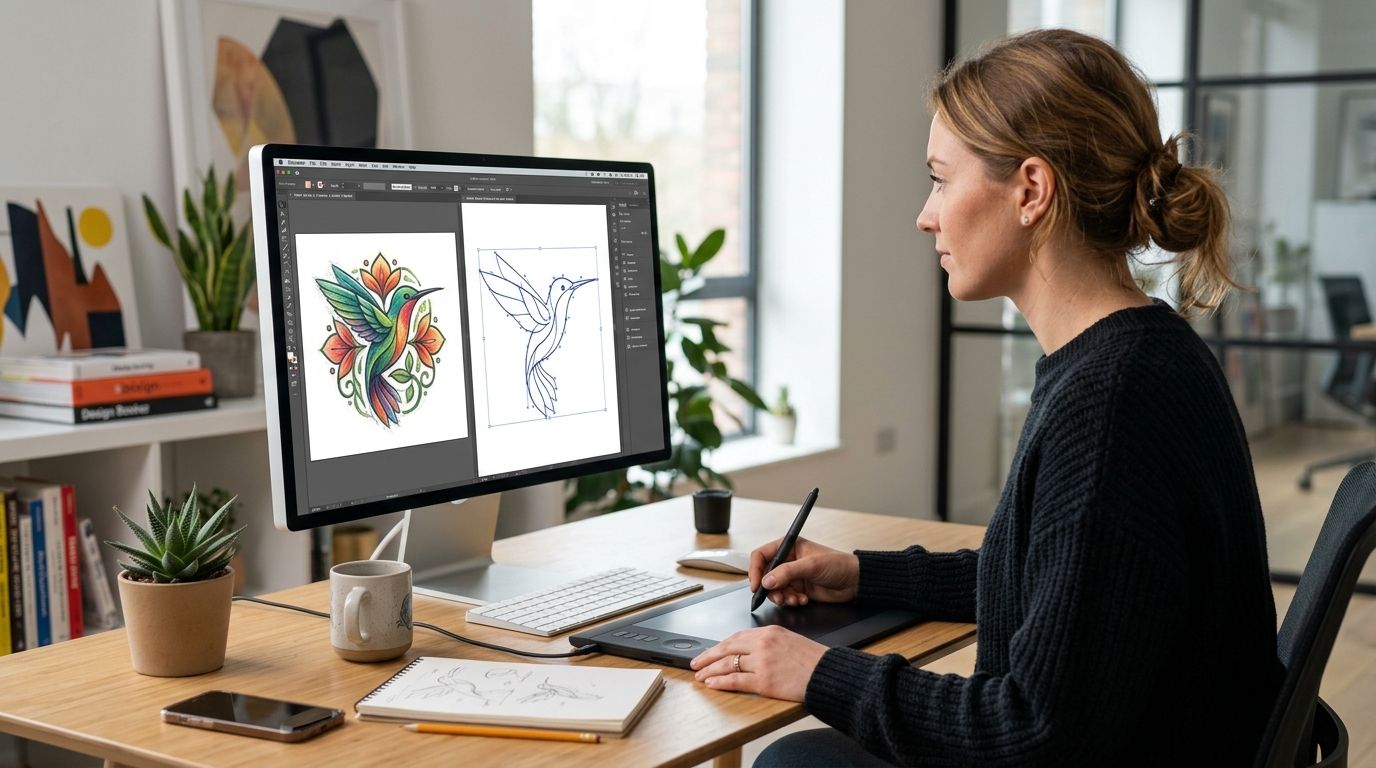
Before committing artwork to any of these routes, converting a raster logo into clean vector paths with image-to-vector conversion tools makes the eventual digitizing step faster and more accurate, regardless of which maker produces the final patch.
Get your patch artwork digitized
Send source artwork for digitizing and custom patch production.
FAQ
What is the best custom embroidery patch maker in 2026?
For most brand and team orders, a digitizing-first workflow like DigitEMB's produces the cleanest stitch files before production. Local shops beat that for rush jobs under 50 pieces, and overseas manufacturers beat it on price for 500+ unit runs.
Is a local embroidery shop better than an overseas manufacturer?
For small rush orders under 50 pieces, yes — a local shop turns work around in days with in-person color proofing. For volume orders of 500 or more, overseas manufacturers win on per-unit cost but add weeks of shipping time.
How much does embroidery digitizing cost in 2026?
Digitizing cost depends on stitch count and design complexity, and varies by provider and file type. Check a cost breakdown before ordering to avoid surprise charges on complex logos.
Can I make custom patches with a home embroidery machine?
Yes, for one-off or hobbyist patches a home machine works fine, but hoop size limits patch dimensions and consistency across a large batch is hard to maintain by hand. It is not a practical route for team or brand-scale orders.
What is the difference between embroidered and woven patches?
Embroidered patches use standard stitch density and read as raised, textured designs, while woven patches use a tighter weave that holds fine text and detail embroidery cannot reproduce. Woven patches also sit flatter on fabric.
Do printed patches look different from embroidered patches?
Yes, printed and PVC patches use ink or molded material instead of thread, so they handle gradients and photo-level detail but lack the raised texture of a stitched patch. Brands wanting a classic embroidered look should stick with embroidery.
What information does a patch maker need before starting production?
A digitized stitch file, thread color references, chosen border and backing style, and patch dimensions. Sending vague source art without digitizing first usually adds a revision round.
How long does a custom patch order take in 2026?
Local shops can turn around small rush orders in days, while overseas bulk manufacturers typically need weeks once shipping and customs are factored in. Timeline should be the first filter when picking a maker.
One last thing
Border choice gets decided at the digitizing stage, not after — a merrowed border needs extra stitch allowance built into the file, and adding it later means redigitizing the whole patch. Confirm border and backing before the stitch file is finalized, not after the first proof comes back.